

Unique projects

Playtika

More Projects:

The Company &
the Product

Playtika is an Israeli gaming company that develops online games across multiple genres and platforms, employing thousands of people across global sites.

As the organization grew, Playtika needed an internal performance evaluation system that could support large-scale employee reviews, make the process more efficient and consistent, and provide managers and HR teams with a clearer view of employee performance across the company.

Project Goal

To design a tailored employee performance evaluation system from scratch, supporting Playtika’s unique review process across multiple personas and organizational levels, while making the experience more efficient, structured, and engaging through a friendly, game-inspired interface.

The Challenges

Complex evaluation flow across roles and permissions

As a large global company, Playtika had a long and highly specific evaluation process involving multiple user types, organizational levels, permissions, and approval flows.

The platforms previously used for the process were not fully tailored to Playtika’s needs, forcing users to work around system limitations and navigate a flow that was already complex by nature. As a result, the process became even longer, more cumbersome, and harder to manage efficiently.

Multiple systems, no unified flow

The existing evaluation process relied on multiple platforms running in parallel, creating a fragmented experience for both employees and managers.

Users had to move between different interfaces, manually transfer information, and deal with disconnected workflows. This made the process harder to complete, increased frustration, and led to errors, inconsistencies, and synchronization gaps throughout the evaluation cycle.

Low employee engagement and completion rates

The evaluation process suffered from low employee engagement and poor completion rates.

The system was difficult to access, challenging to use, and built around long forms that felt frustrating to complete. This created significant friction for employees and required HR teams to invest extra effort in reminders, follow-ups, and manual outreach.

Even then, evaluation cycles often ended with missing data and incomplete submissions, limiting the organization’s ability to complete the process efficiently and make full use of the results.

Executive Solution Summary

Executive Solution Summary

Centralized Task Access.

We centralized all open tasks in one clear access point, enabling users to quickly understand what they needed to do and complete their actions with minimal effort.

This was especially important for employees who used the system only occasionally during the evaluation cycle. Although they were secondary users in terms of system depth, they represented a large portion of the system’s users, making quick orientation and easy task completion essential to the success of the process.


Our Process

Group 1707478609
Group 1707478732 (1)
Group 1707478674 (1)

Conversations and interviews with different types of users

In order to define the different personas, understand the complete work process, and map the frustration and pain points of users in the current system, the work order and focus were defined accordingly.

01
02

UX concept

Characterizing a UX concept, while repositioning the information architecture so that it fits the existing work process and allows for easy and quick navigation within the system according to the current stage in the process.

Graphic concept

Design the concept in accordance with Playtika’s Design System so that the system will not seem foreign to users, and will give a sense of a personal, tailored, and precise process to Playtika users.

03

Our Solution

A unified, role-based evaluation system that turns a complex organizational process into a clear, manageable workflow.

Evaluation Timeline & Process Control
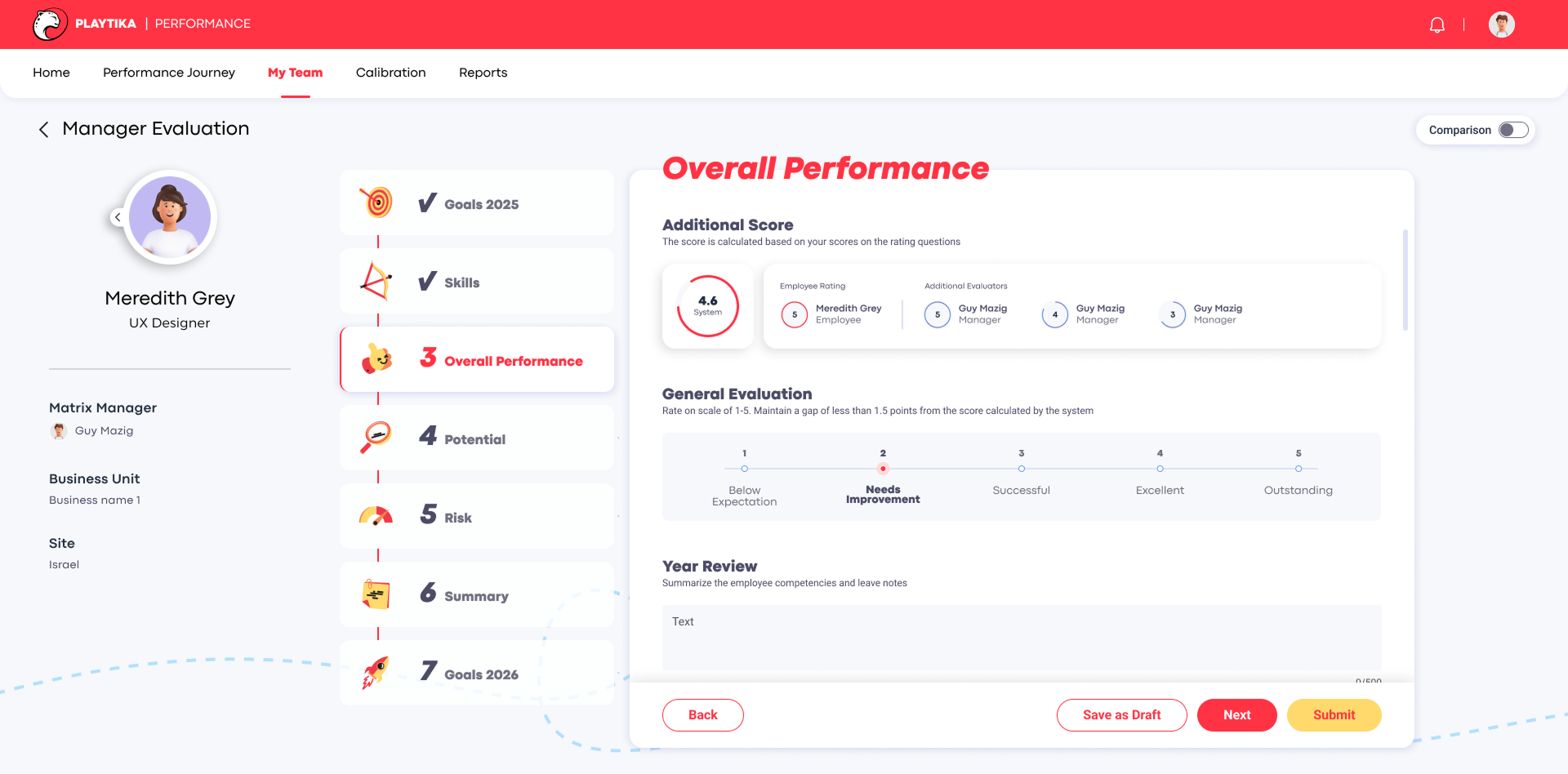
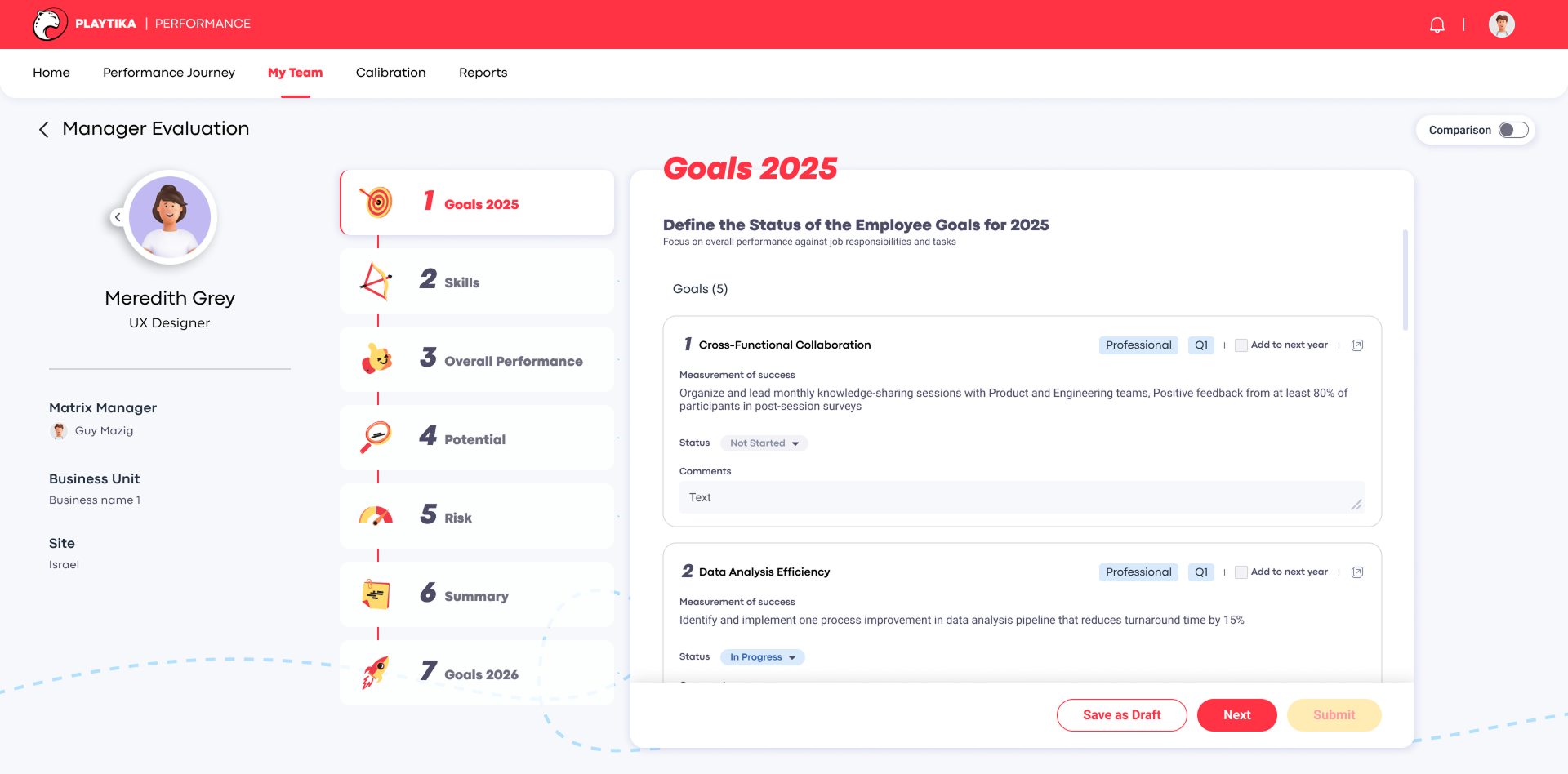
  • We consolidated the entire evaluation process into one operational system, bringing together all stages, actions, permissions, and persona-based flows within a clear information architecture.
  • To simplify a branching and multi-stage process, we presented the evaluation stages on a timeline, clearly showing the current stage, completed steps, remaining tasks, and what users should expect next.
Task Hub & Calibration Tools
  • We centralized all open tasks into one clear task hub, enabling employees who use the system only occasionally to quickly understand what requires their attention and complete actions with minimal effort.
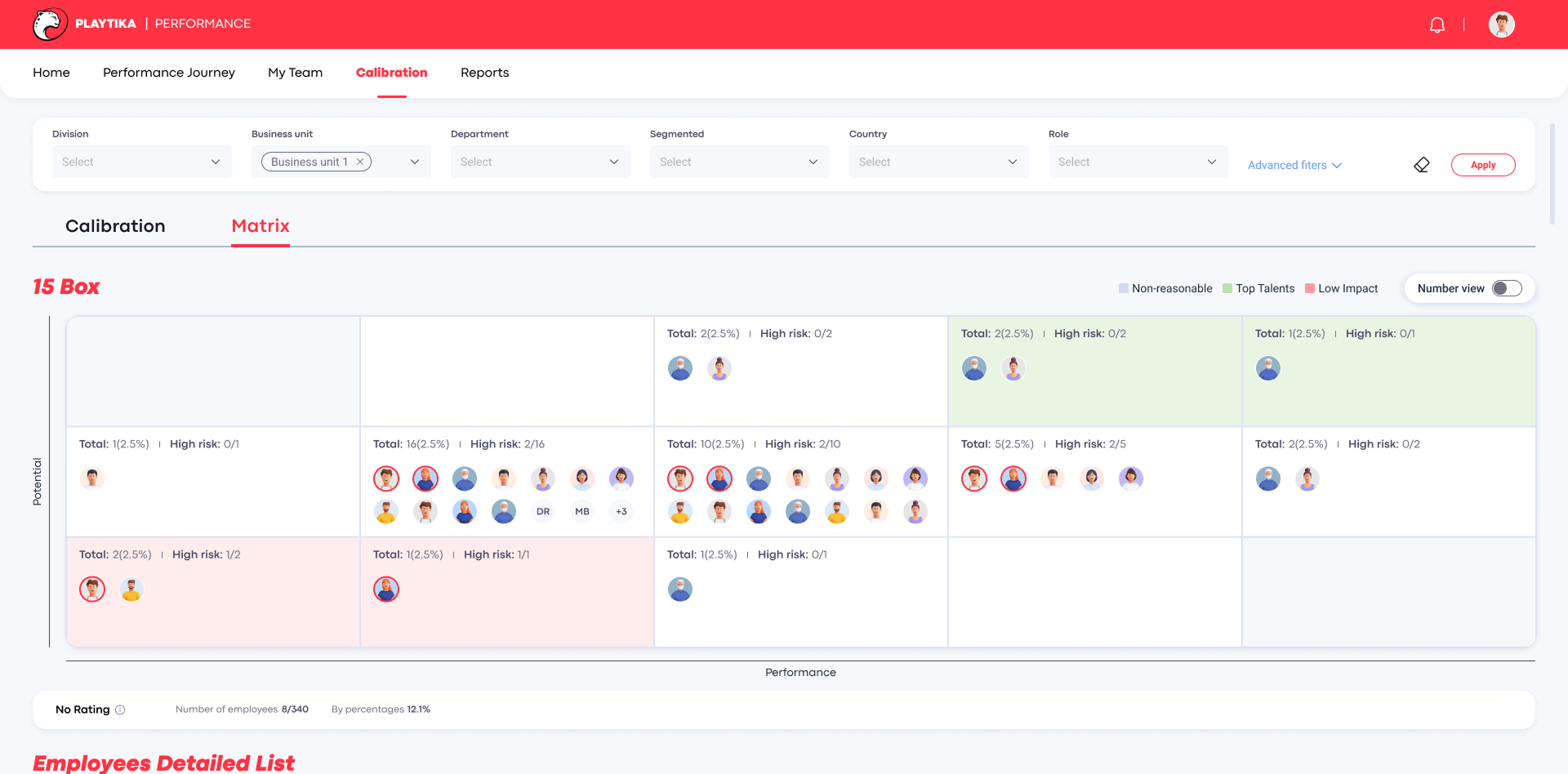
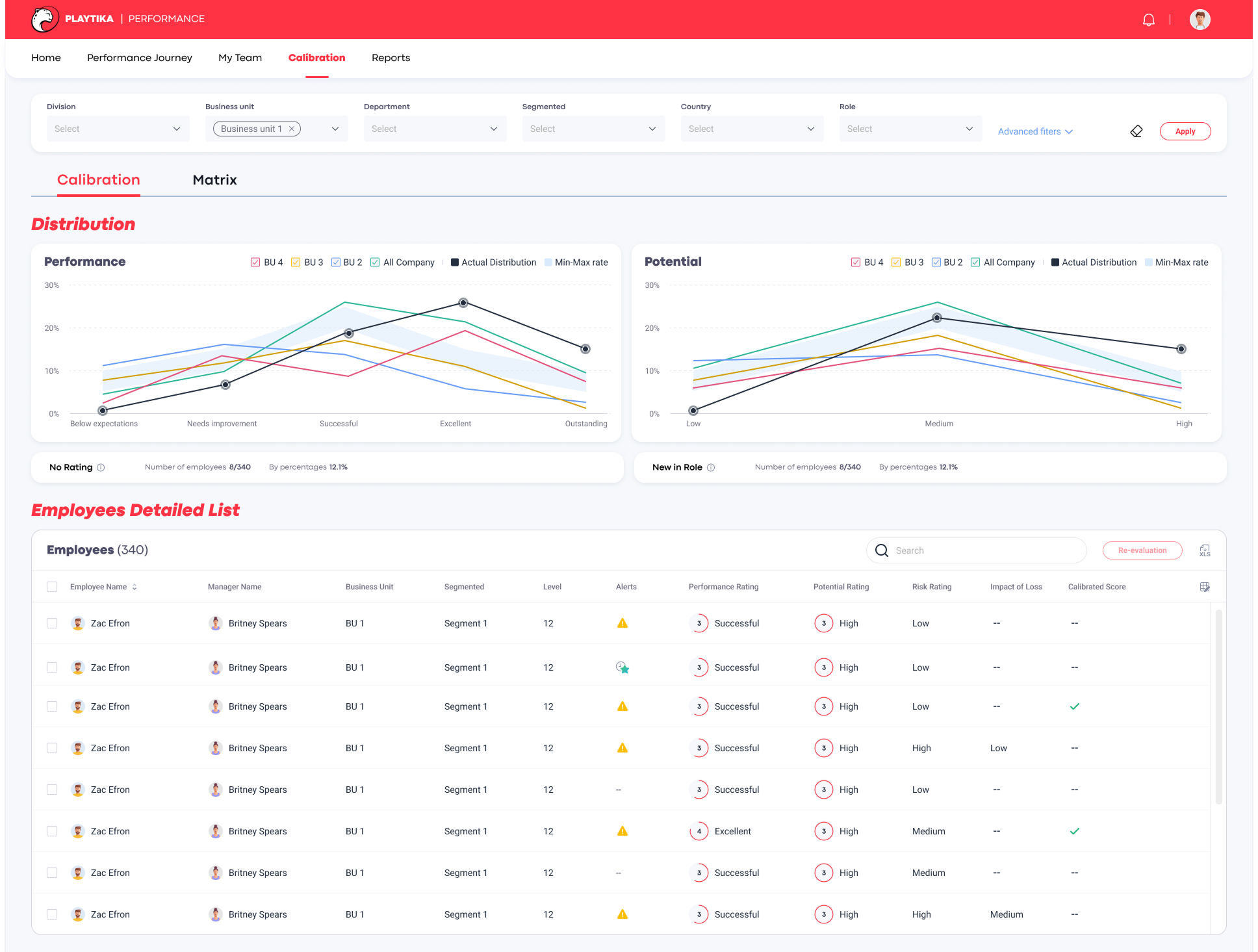
  • We designed a tailored calibration flow for admin users, addressing one of the most complex stages in Playtika’s evaluation process with a solution adapted to the organization’s specific needs, roles, and approval requirements.