
Medical projects

Picodya

More Projects:

The company and the product

Pikomdia is an Israeli health-tech company that has developed a point-of-care diagnostic platform called B-Matrix™. The platform uses microfluidics technology in microarrays to perform molecular and immunochemical tests simultaneously on small samples of fluids such as blood, urine and saliva, providing laboratory-grade results within 15 minutes. The company’s goal is to streamline and make diagnostics accessible quickly and efficiently, with the intention of expanding to global markets.

Project goal

Creation Platform, Point Of Care, Make it accessible Tests Established liquid (like blood and rock) In order to identify Diseases or Situations Medical various. per one including In countries Developing within time short. The mission our: design interface that he can perform In temporarily number multi of Tests, When part From my side The action include also intervention Manually. For the purpose of The super she Execution some The more Diagnoses How many? Slaves time.

The challenges

Synchronization between the physical and digital worlds

Combination and coordination The work between robot Physical Which performs you The diagnosis between system Digital which is located far from him and consumption also Lantern him also control In.

Support for the laboratory work process

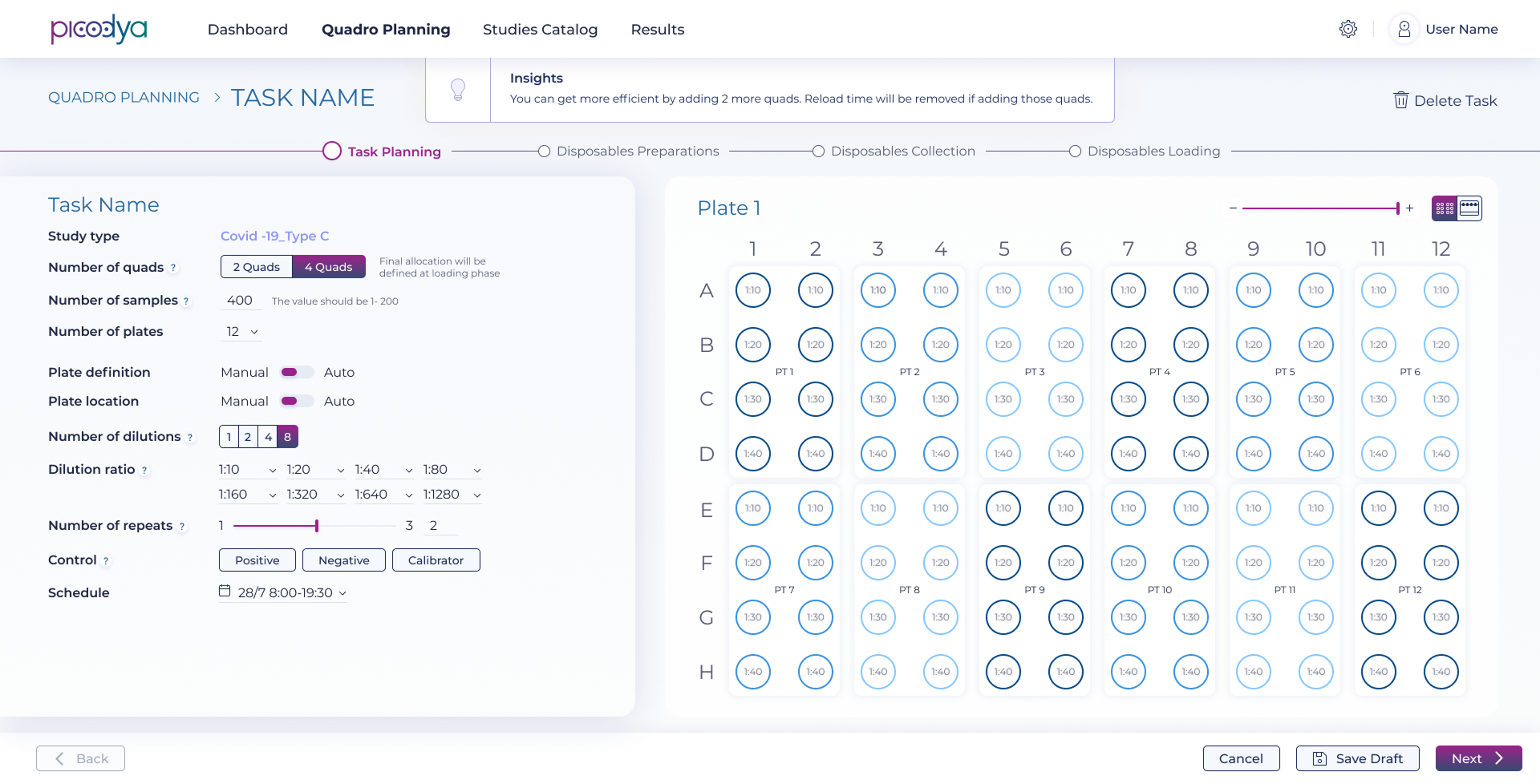
Mapping and planning Processes work Complex Very of The user. Coordination between Actions Physical, Required For preparation The samples For the robot In progress bank’ variance In the laboratory, with Materials Dear mind bungling height price expensive. between Actions Digital In them The user Required edit Coupling Accurate between The tray The physical who brought For the device, between The location of all sampling who put On the screen of The system.

Planning a work schedule for the system and robot

The capabilities The progressives of The robot Enable run number multi of Tests in parallel, Still there is not few Tests Required To be performed all Time And for all type examination there is you array The times its, so In everything minute That the robot not worker Considered To waste of time And money. Therefore one The challenges The most prominent Were succeed manage turn work precise To the system.

The Solution - Executive Summary

The Solution - Executive Summary

Our solution focused on connecting the physical and digital worlds, with the understanding that the key to success is adapting the system to the lab worker’s mental model. An accurate and easy-to-use system allows for a connection between tray insertion and sample scanning, while taking into account the users’ mental difficulties. In addition, we designed a system that is capable of managing multiple operations simultaneously, optimizing waiting times, and managing the schedule, all while integrating a monitoring and alerting system for ongoing process monitoring.

Our process

Group 1707478609
Group 1707478732 (1)
Group 1707478674 (1)

Study

We started with observations. and interviews Users and we continued totour In the laboratory. We examined deeply you Processes The work, The environment, The lighting, The tools And we reviewed deeply you process The lab technicians work ranges from taking the samples to inserting them into the device and turning it on.

01
02

UX concept design

After mapping the complex user scenario , we identified the potential failure points and proceeded to create a UX concept for the system .

The graphic concept

After approving the UX concept , we moved on to the graphic concept phase . At this stage, we combined several significant factors :

  • Coordinating expectations with the client and how he sees the system’s appearance in his vision .
  • The company ‘s brand values
  • Addressing technical limitations
  • Completing the UX through design – design according to the complexities and needs of the lab workers in terms of dividing attention, work order , and laboratory space conditions.
03

The complete solution

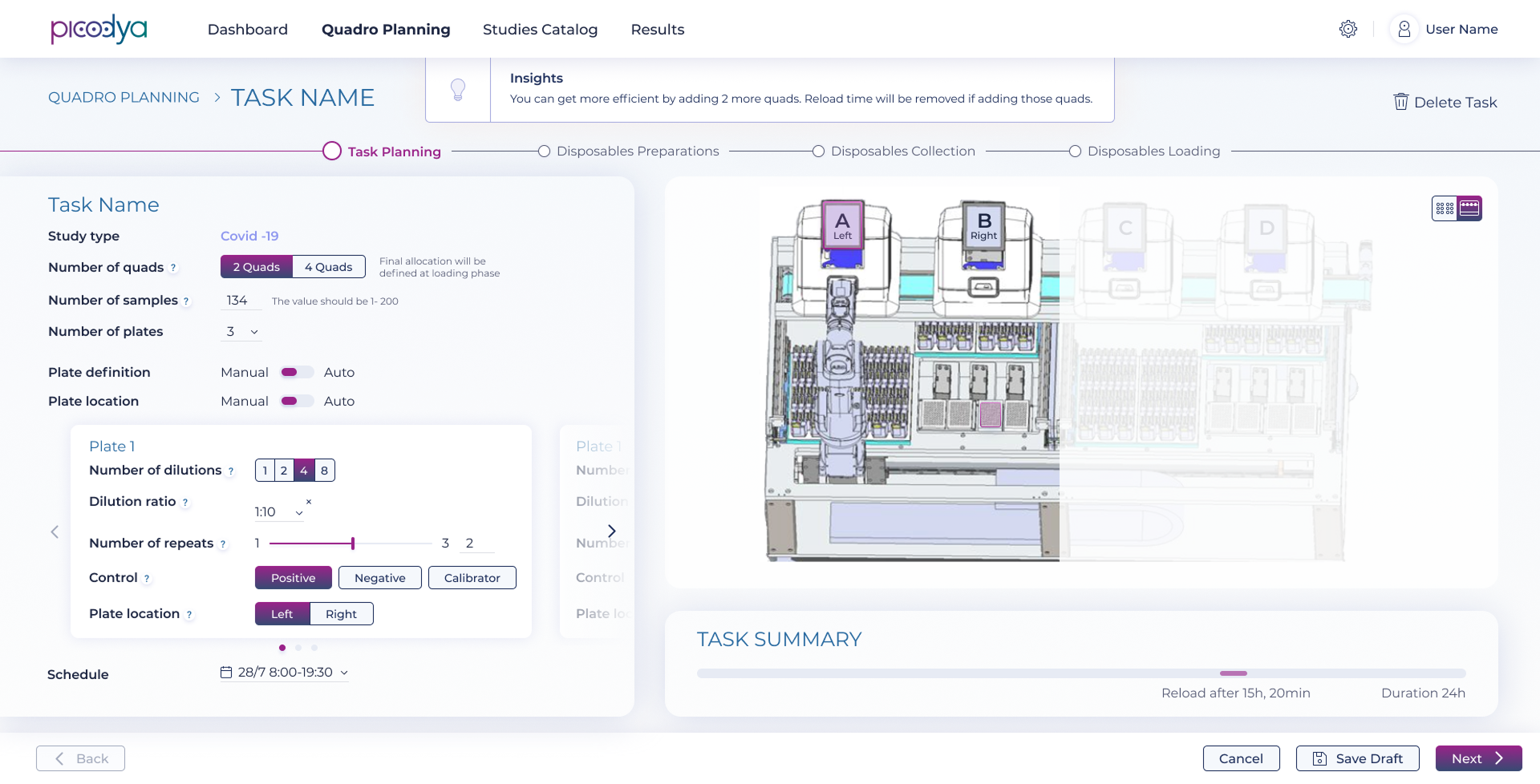
Connecting the physical world with the digital world

Connecting the physical world with the digital world

It was necessary to accurately model the robot in order to create a connection between the physical and digital worlds, and to transfer the sample arrangement technique in a way that would allow correlation between inserting the tray with the tests into the machine and scanning the samples in the system.

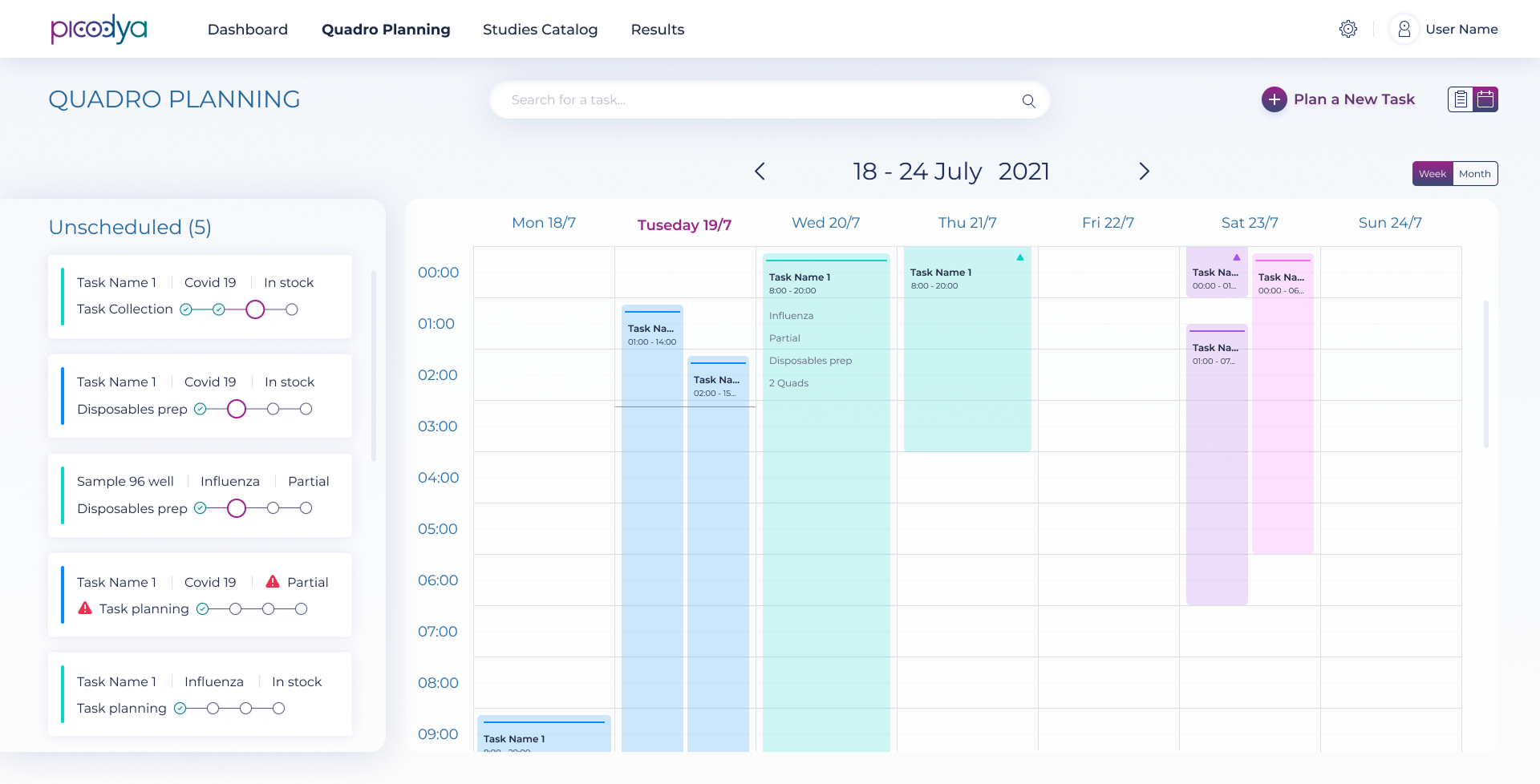
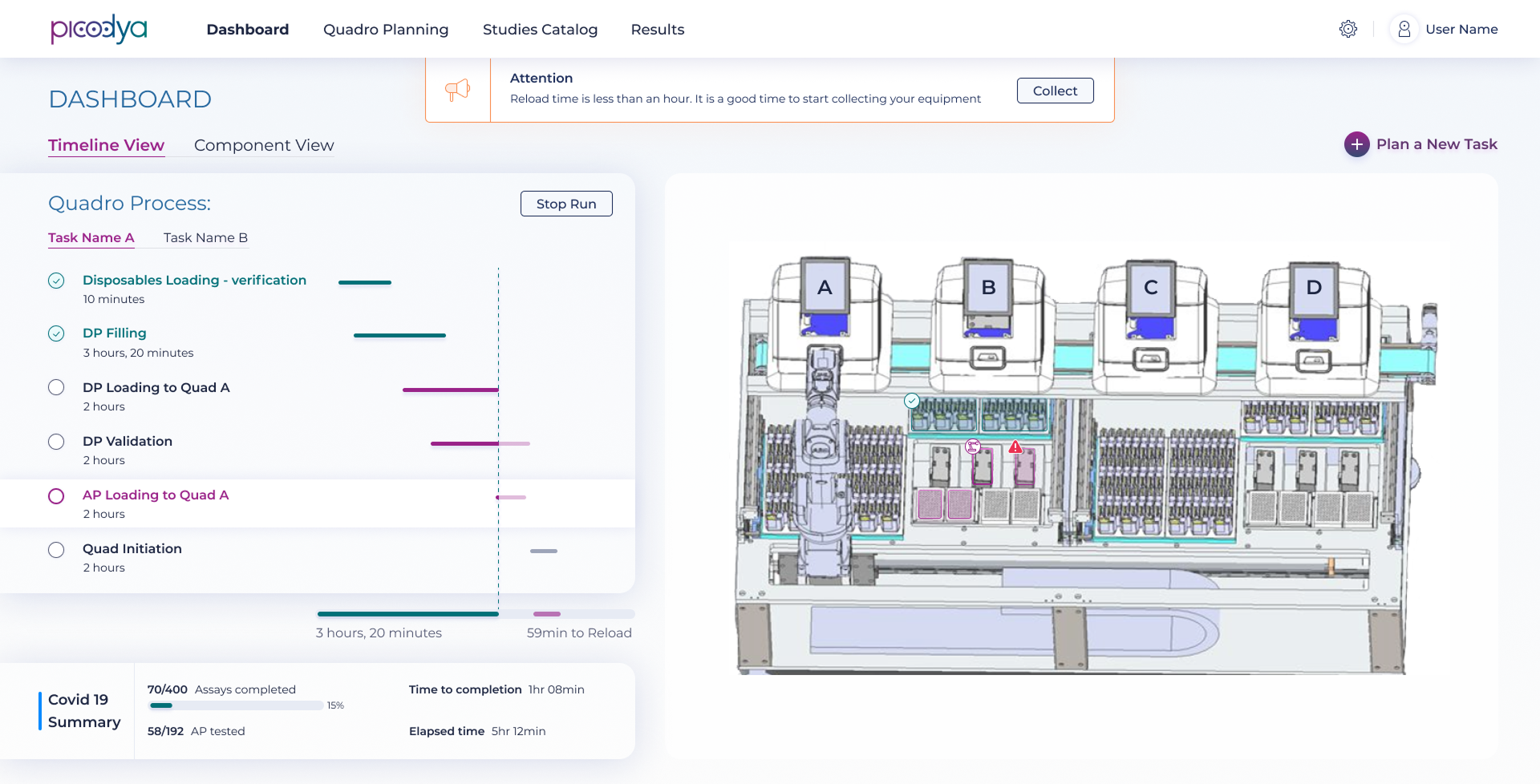
Managing a variety of simultaneous operations and managing waiting times

Managing a variety of simultaneous operations and managing waiting times

The challenge was to design a system that could effectively manage multiple operations simultaneously, while maintaining transparency for the user regarding what was happening at any given moment. Our solution included optimizing the waiting times between diagnostics, so that while the system is performing diagnostics, the user can already plan the next diagnostics. In addition, during work, the system allows access to the results of completed diagnostics and to manage the schedule of continued work, so that flexibility in time management is maintained. All this, while combining a constant monitoring system and alerts that provide the user with up-to-date information about every process in the system.