

Defense projects

Magic Fly (RAVEN)

More Projects:

The company and the product

Rafael is a global leader in the development, production and marketing of advanced combat systems and defense equipment. It is a central pillar of the security of the State of Israel and develops groundbreaking technologies in areas such as air defense, anti-tank missiles, active defense systems, as well as in the fields of laser , sea, air, intelligence and cyber.

The system is a groundbreaking solution for combat in built-up areas, the nightmare of every modern army . It reduces the need for fighters to enter dangerous terrain, and allows the fighter to make decisions and even operate remotely .

Project goal

system Based AI enabling For a warrior single manage event Multi-tool (drones) and robots ground), reduce you The need At the entrance Warriors To the area dangerous, and provide image Intelligence Accurate Who saves life.

The challenges

A system for a variety of infantry fighters

:The system Amore serve Warriors From units Diverse My husband Levels control variance Flying Drones and on yes consumption be Simple enough By mind fighter will be able activate her after training Basic, but Sophisticated enough manage complexity Technological Awesome.

Urban Warfare: Extreme Work Environment

The use In civilians As a protector Binding you The army take sub caution and make sure all action In a way responsible before Receiving Decisions And opening In fire. The tools need scan And for maps Buildings, identify My son person, and to distinguish between Staying Innocent For warriors on Trust Identification weapon. this not mere technology this decision on life And death. The operator is in the field, in a stimulating environment, with a critical time arrow – the mission is limited to half an hour (battery life). The use will be with gloves, on a 10-inch tablet, in challenging conditions.

Autonomy vs. human control

From 5 tools for one task. 5 Tools various, all one with status, Location and capabilities variance, Obligatory you The user be tense For the task All of it, not per tool separately, and to work you all The data On time truth.

The tools are autonomous and with artificial intelligence , but the decision on the course of the mission You stay. In my hands person. how Creators interface Who gives faith In the system, but guard on Cognition and control The full of The operator?

The Solution - Executive Summary

The Solution - Executive Summary

From the study and analysis we did, we realized that the key to success is to put the mission at the center, not the tools.
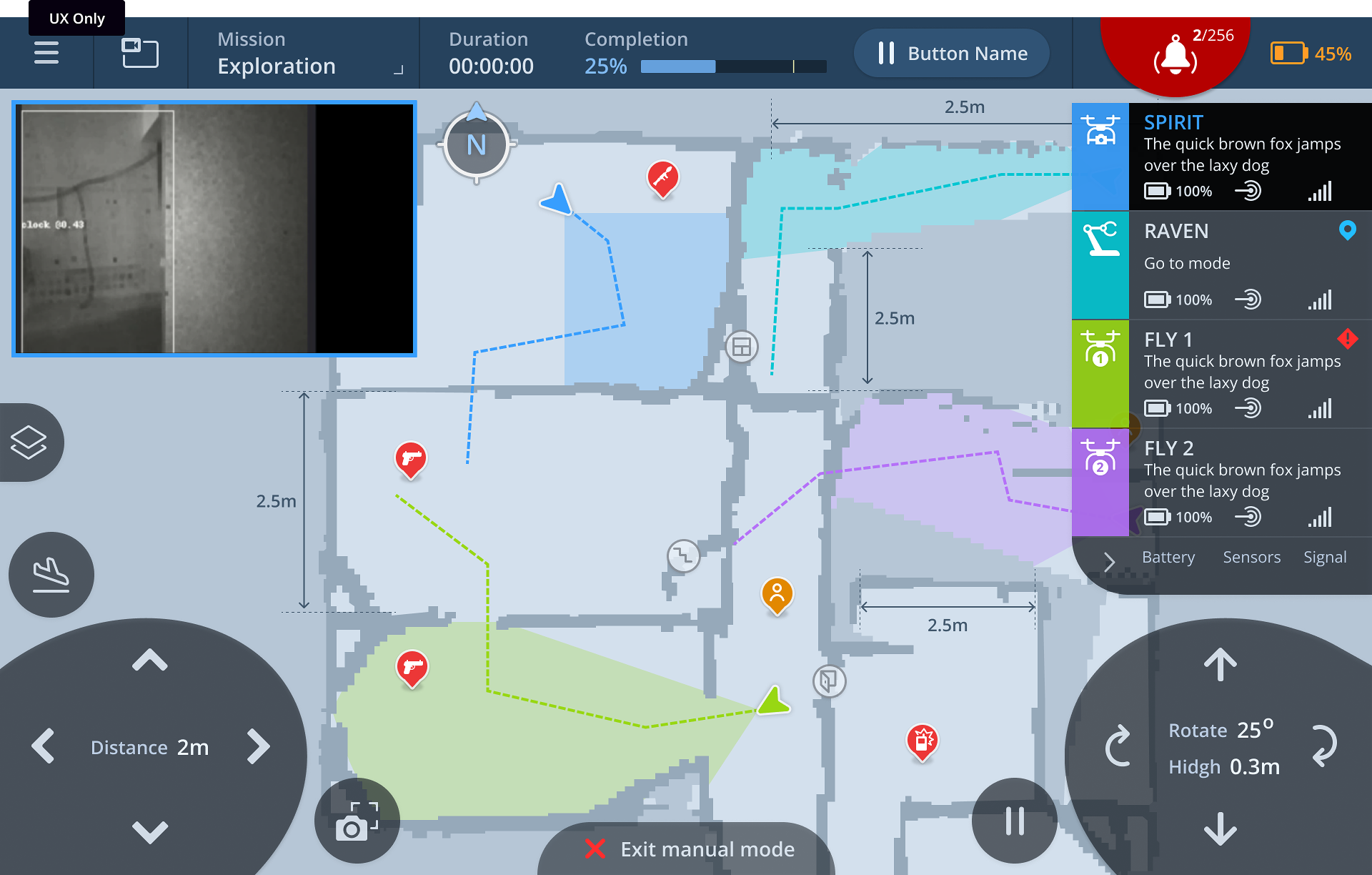
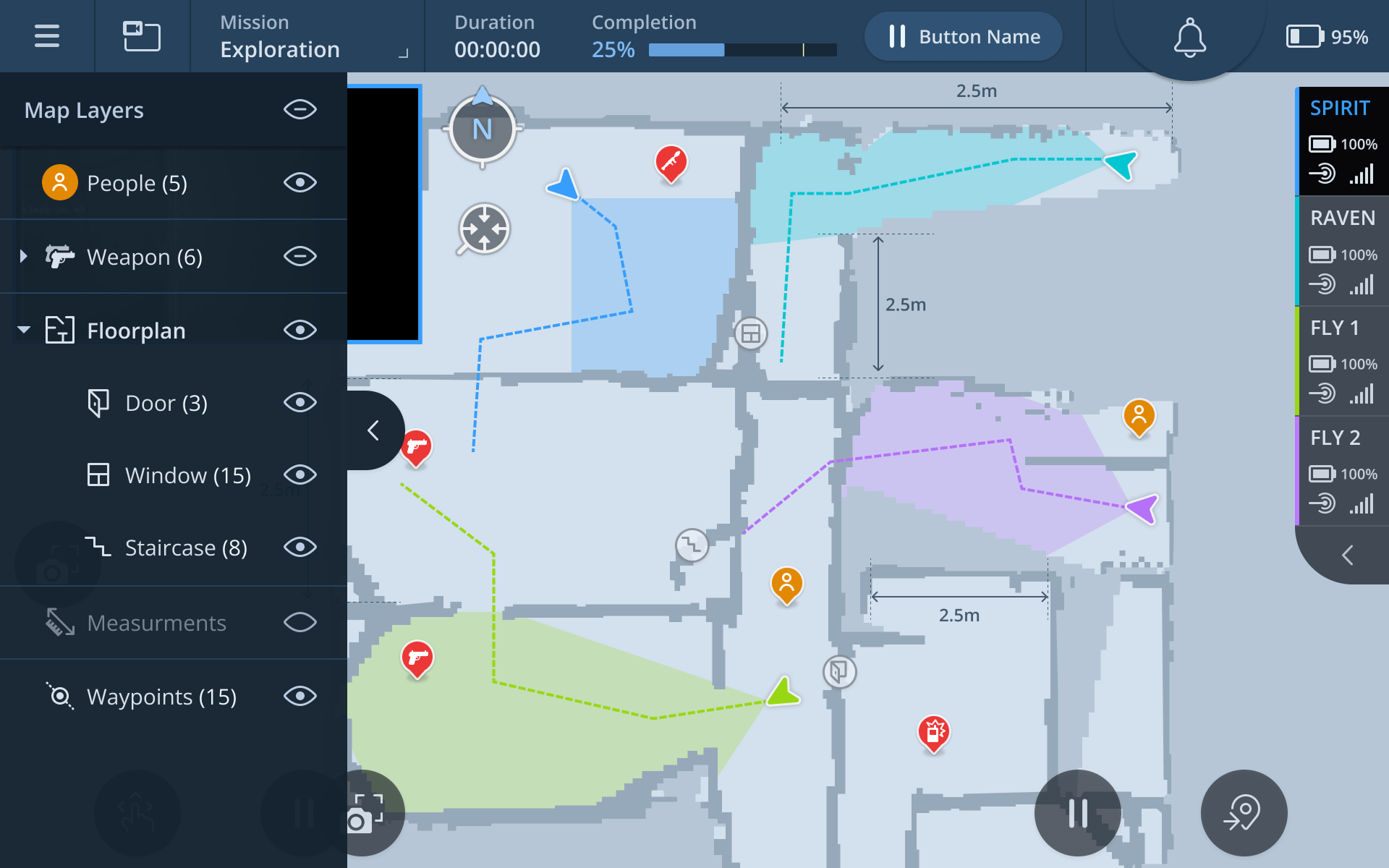
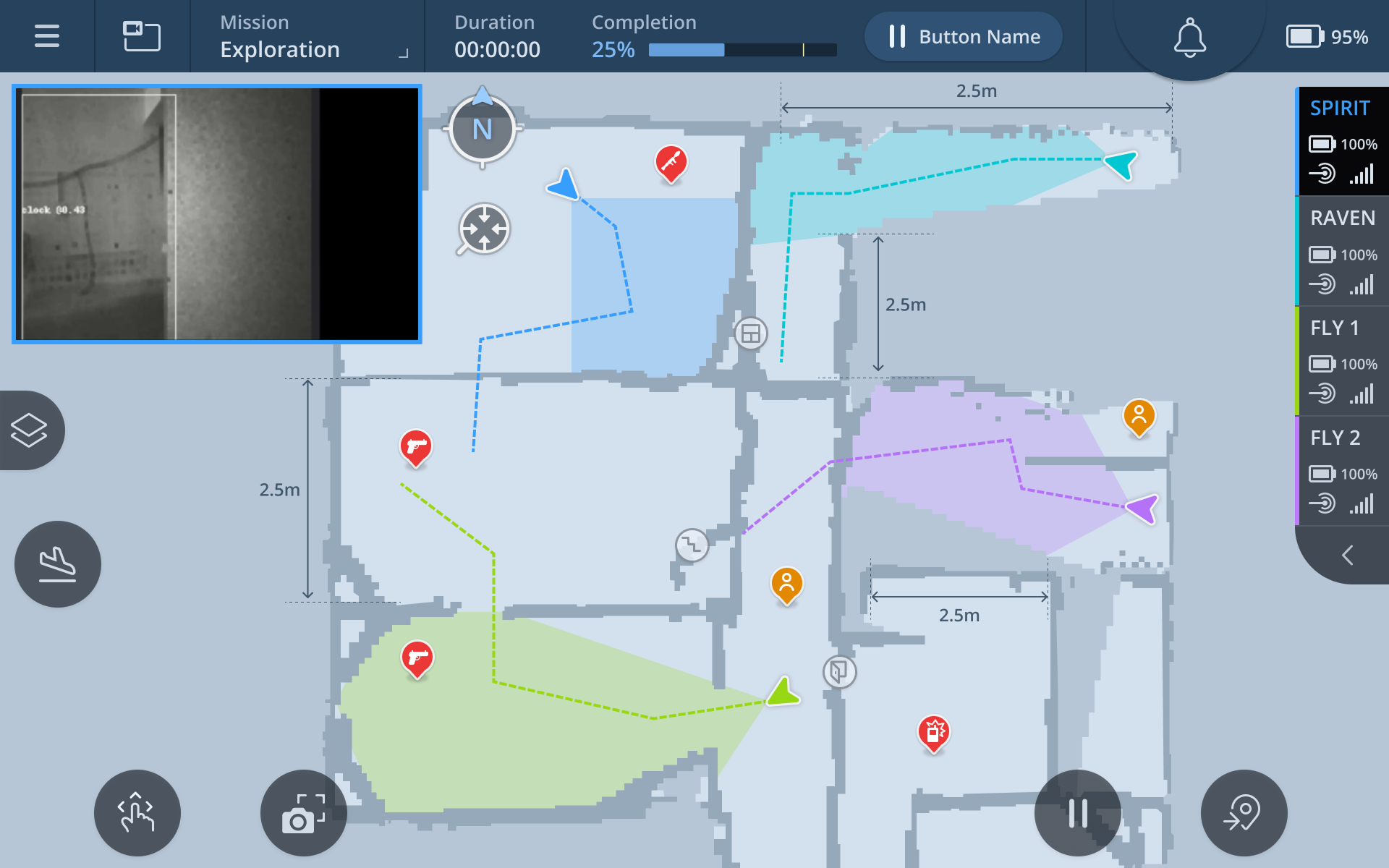
We created interface which presents Image situation Missionary Clear: Map progress On time truth, Percentage Cover, Discoveries Marked (people, weapon, Materials detonator, Regions not accessible), And status general of The mission.

The interface Reflector you Progress The mission within Enable Receiving information on tool spotted, allowing Monitoring of The activity The autonomous within ability override and taking control In all time.

The process we carried out

Group 1707478609
Group 1707478732 (1)
Group 1707478674 (1)

We started with a Design Sprint workshop

We gathered with the Rafael team and potential users for an intensive workshop, where we analyzed the challenges and goals, defined criteria for success, and formulated a common operating concept. During the workshop, we analyzed the mental needs of the warrior at each stage, what is important to see and what can wait. We visited Rafael’s Makers Lab, observed the researchers, and asked tough questions.

01
02

We performed usability tests

During the usability testing phase, we conducted sessions with drone operators from different units and team leaders to test the operational concept we formulated in the workshop. During the testing, we gained valuable insights into what worked best and what didn’t, and deepened our understanding of the exact needs of the users, which contributed to further improving the solution.

We revised and developed the UX concept.

We took the insights we gained from the usability testing phase and refined the operational concept. We updated the interface and user experience based on the feedback we received, focusing on improving the flow and simplicity of the process. The result is an improved UX concept that is more tailored to the real needs of users, with an emphasis on task management (versus tool management), simplicity of operation, and flexibility that will allow adaptation to a wide range of use cases.

03

The complete solution

We put the mission at the center, not the tools.

We put the mission at the center, not the tools.

We created interface which presents Image situation Missionary Clear: Map progress On time truth, Percentage Cover, Discoveries Marked (people, weapon, Materials detonator, Regions not accessible), And status general of The mission. The interface Reflector you Progress The mission within Enable Receiving information on tool spotted, allowing Monitoring of The activity The autonomous within ability override and taking control In all time.

Autonomy versus human control

Autonomy versus human control

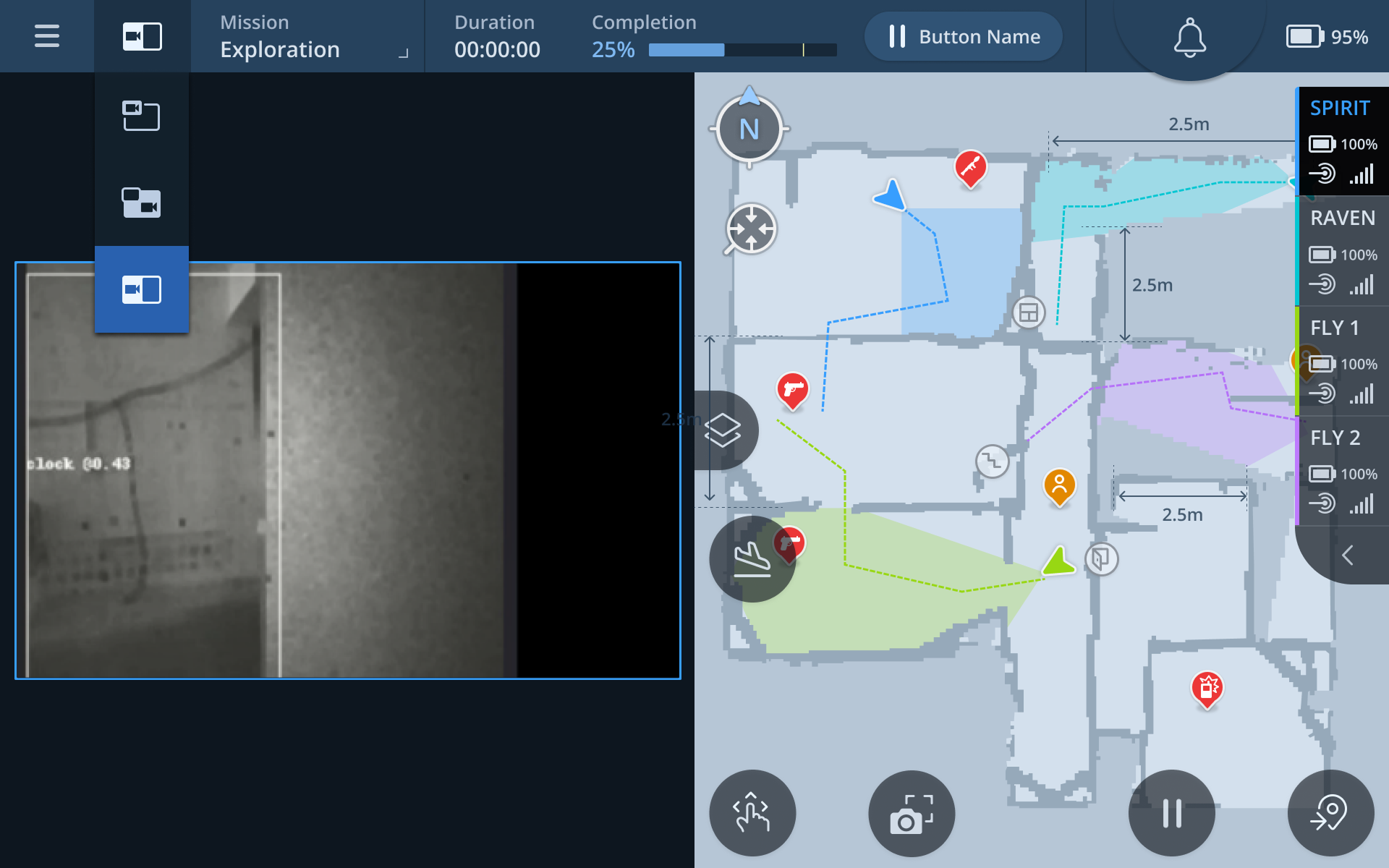
Our system seamlessly transitions between 2D and 3D views, enabling advanced automatic recognition – from a 2D map for quick perception to a 3D view that provides complex spatial understanding. The tools identify people and distinguish between innocent bystanders and combatants based on weapon recognition. The system presents the information in a clear visual format, with the ability to view raw images and perform in-depth analysis. In addition, we made sure to maintain the Human in the Loop principle: the system provides AI-based recommendations, but the user makes the critical decisions, such as approving a shot, while maintaining a clear understanding of the situation and full confidence in making the decision.